
ASIC success story
Application
With the ever-increasing electronification of automobiles, self-diagnostics are becoming more common, and even expected, to ensure that potential issues are flagged and resolved early. These diagnostics are usually read out on an OBDII scanner that plugs into the standard 16-pin socket found in most cars.
Once fully dependent on mechanic shops, consumers can now purchase off-the-shelf, low-cost versions of what used to be available only to the pros. The scanners are typically used to read the Diagnostic Trouble Codes (DTCs) for the engine, transmission, and other systems whenever the dreaded “check engine” light goes on.
The user can read codes, reset codes, and make quick progress in discovering the issue at hand. Unfortunately, car manufacturers use a variety of communication protocols. Thus, a “universal” handheld reader needs the ability to recognize and adapt to the correct protocol once plugged into the car.
At a glance
Interface36V OBD-II
Switch array5Ω high-voltage
Bus100kHz SPI
MarketConsumer
Custom solution from CSS
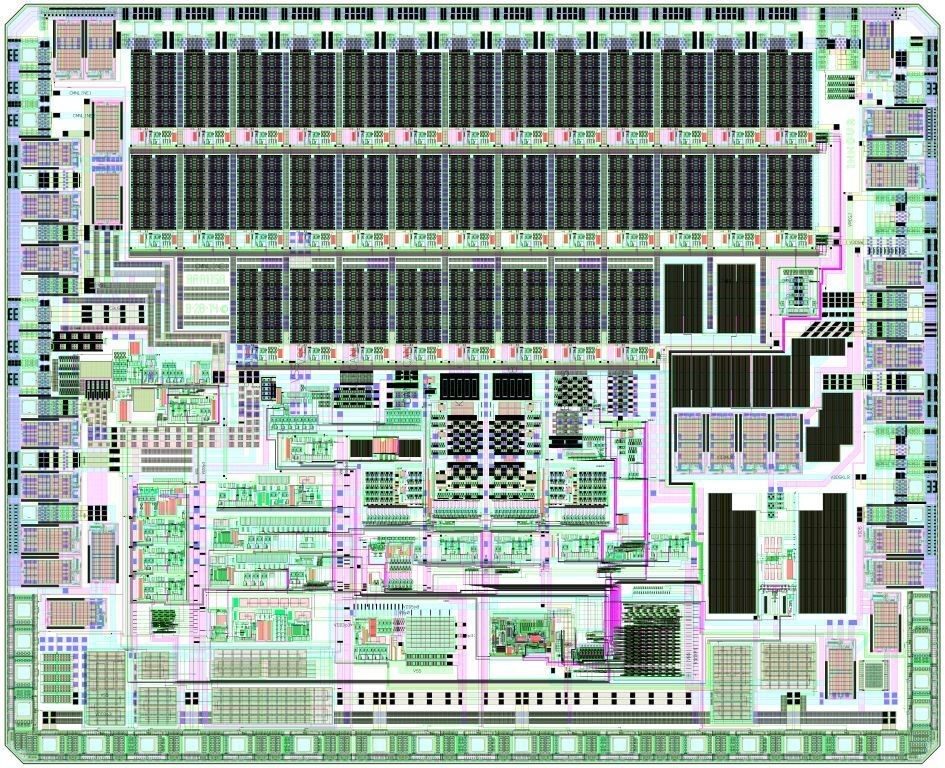
CSS developed a cost-effective ASIC integrating all the necessary automotive communication protocols into one device.
The ASIC combines low-voltage digital & analog circuits with high-voltage BCD switches to support a 36V interface.
The switch array allows a diversity of inputs to be connected to the correct processing circuitry for each protocol function.
Key features
- DongBu HiTek 180nm High-Voltage CMOS
- Low-Impedance (5 Ohms), High-Voltage Switch Array (36V)
- 100 kHz SPI Communications Bus
- Supports multiple vehicle protocols